

A Facebook ads agency in 2026 no longer works with people sitting in front of a dashboard alone: it works with artificial intelligence agents that read, analyze, and adjust campaigns in real time. On April 29, 2026, Meta officially opened its advertising system so that tools like Claude, ChatGPT, and Perplexity can connect directly to ad accounts, with no need for developers or complex technical configurations. This change redefines what an agency can do for its clients and how fast it can do it.
What Are Meta Ads AI Connectors and Why They Change Everything
Meta Ads AI Connectors are official connectors that Meta launched in open beta on April 29, 2026. They allow any compatible artificial intelligence tool, such as Claude or ChatGPT, to access a Facebook Ads account directly to read data, create campaigns, adjust budgets, and analyze results, all with permissions authorized by the account owner.
Before this launch, connecting an AI to Meta Ads required creating a developer application, waiting for approvals that took days, and accepting the risk of account suspension for using unofficial integrations. That was a process reserved for specialized technical teams. Now, with a single OAuth authentication click, any Facebook ads agency can have Claude or ChatGPT operating inside its advertising accounts in an official and secure way.
The connectors have two main components. The first is the MCP server (an open communication standard created by Anthropic and donated to the Linux Foundation), which enables natural language queries and actions from within the AI chat interface. The second is a command-line interface aimed at agencies with more complex and automated operations. Together they expose 29 distinct tools inside the account: from identifying underperforming ad sets to building a complete campaign from scratch.
How a Facebook Ads Agency Works Today with AI Agents
A Facebook ads agency already using these connectors can ask Claude, in plain language, to identify which ad sets are spending money without generating sales. Claude queries the account in real time, cross-references the data, and delivers a diagnosis in seconds. What used to take one or two hours of manual work now happens in a five-minute conversation.
The concrete workflow looks like this: the agency analyst opens their preferred AI tool, types something like "show me ad sets with cost per result above target this week," and the AI queries the Meta API, processes the information, and responds with a table and recommendations. If the analyst approves the suggested changes, the same AI executes them directly in the account, without anyone needing to open Ads Manager.
The actions agents can perform today include reviewing campaign performance, modifying budgets, pausing or activating ad sets, creating new creatives with copy variations, analyzing the product catalog, and diagnosing problems in the conversions setup. All of this happens within the permission limits the advertiser defines when connecting their account.
Context note: a three-person agency that adopted AI-assisted workflows scaled from managing 8 client accounts to 20, without hiring additional staff. The efficiency gain came from automating audits, opportunity detection, and report generation that previously consumed most of the team's time.
What Services Does a Facebook Ads Agency Offer When Working with AI
A Facebook ads agency that integrates artificial intelligence agents can offer services that were previously exclusive to much larger or more expensive teams. The first service transformed is account auditing: instead of spending an entire day reviewing metrics manually, the AI produces a complete diagnosis in minutes, detecting everything from misallocated budgets to audiences consuming spend without generating conversions.
The second transformed service is continuous optimization. Agents can monitor campaign performance throughout the day and propose or execute adjustments without waiting for the weekly team review. This is especially valuable for clients with e-commerce campaigns where conditions shift quickly.
The third service is client report generation. Instead of building tables and presentations manually, the agent extracts the data, interprets it, and produces executive summaries ready to send. The time saved on this task alone can add up to several hours per week per managed account.
The fourth service is campaign creation. With Meta's official connectors, the AI can structure complete campaigns, configure ad sets by audience, and upload creatives, following the agency strategist's instructions while handling the mechanical execution automatically.
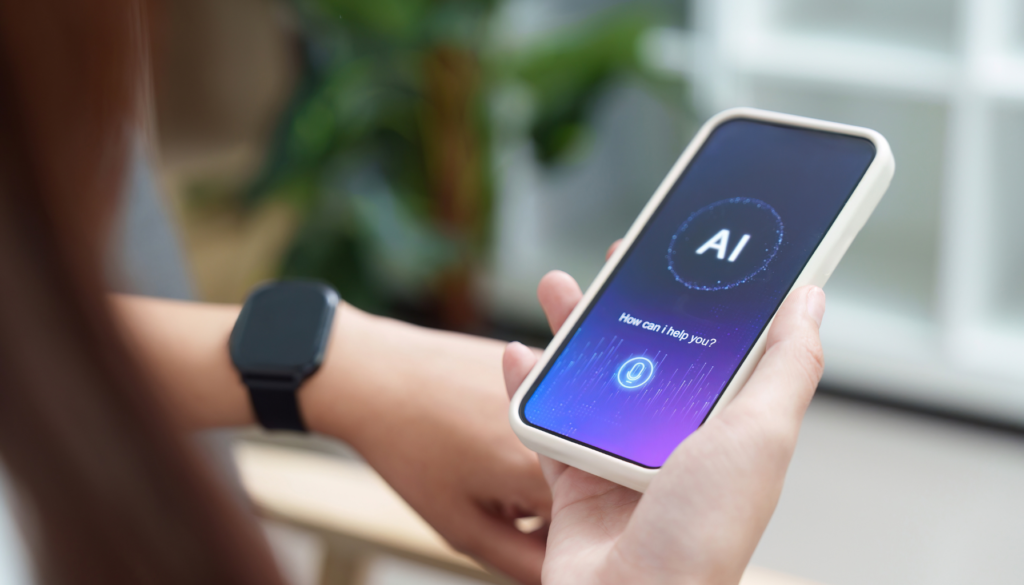
How a Facebook Ads Agency Works with the MCP Protocol
MCP stands for Model Context Protocol, an open standard that allows artificial intelligence tools to connect to external platforms like Meta Ads in a standardized way. For an agency, the practical advantage is that it does not need to build a separate integration for every AI tool it uses. With a single active MCP connector, Claude, ChatGPT, or any other compatible tool can access the same data and execute the same actions.
The simplest analogy is a universal power adapter. Previously, each AI tool had its own plug type and the agency had to buy a different adapter for each one. With MCP, all plugs are the same and any compatible device works in the same outlet.
For the agency, this means it can choose whichever AI tool best fits each task without losing access to client data. It also means that when a better tool comes along, the transition does not require reconfiguring every integration from the ground up.
What Is the Cost of Hiring a Facebook Ads Agency with AI Capabilities
The cost of hiring a Facebook ads agency in 2026 varies depending on the service level and account complexity, but AI integration is changing the pricing structure of the market. Agencies already working with agents can deliver more value for the same price, because their teams spend less time on repetitive tasks and more time on strategy.
A Facebook ads agency with AI-assisted workflows can manage a larger number of accounts with the same team, which in some pricing models translates into more competitive rates for the client. In other models, the time savings are reinvested into deeper analysis and more refined strategies, justifying similar or higher fees but with better results.
What clearly does change is response speed. An agency operating with AI can detect a problem in a campaign and correct it the same day, instead of waiting for the weekly review. For active budgets, that difference in reaction time can represent a significant amount of recovered ad spend.
Can a Facebook Ads Agency Improve ROI with AI
A Facebook ads agency can improve its clients' return on investment when it uses AI to detect inefficiency patterns that humans take longer to identify. One documented example: a fashion brand discovered with Claude's help that it was spending more than $3,200 per month on audiences that were not converting. The diagnosis and correction took ten minutes once the AI had access to the data.
The improvement in ROI comes from three fronts. The first is the reduction of wasted spend, by identifying budgets assigned to segments, time slots, or creatives that are not generating results. The second is optimization speed: adjustments that were previously made weekly can now be made daily, bringing campaign performance to its optimal point faster. The third is the quality of creative analysis, because the AI can compare the performance of different formats and messages at scale, processing more simultaneous variables than a human analyst can handle manually.
The limit of what AI can improve lies in strategy and knowledge of the client's business. Artificial intelligence optimizes within the framework the agency defines. That is why the best Facebook ads agencies in 2026 are not the ones that handed everything over to AI, but the ones that combine human strategic judgment with the execution and analysis capabilities of agents.

Why Meta's Official Launch Matters More Than It Seems
Before April 29, 2026, agencies and advertisers who wanted to connect AI to their Facebook Ads accounts used unofficial third-party integrations. The documented problem is that Meta interpreted those connections as suspicious behavior and suspended advertising accounts as a security measure. Paid media operators publicly confirmed that the number of suspensions attributable to this type of integration was significant.
With the official launch of Meta Ads AI Connectors, that situation changes structurally. The connection runs through Meta's OAuth authentication, with credentials recognized by the platform itself. This means a Facebook ads agency can connect Claude or ChatGPT to a client's account with the same legal and technical security it has when using Ads Manager directly.
The other relevant point is that Meta made this launch universal, with no regional restrictions or advertiser size requirements, meaning both a boutique agency and an international-scale agency have access to the same starting point. The competitive advantage does not come from having access to the connector, but from knowing how to use it better.
Frequently Asked Questions About Facebook Ads Agencies and Artificial Intelligence
How to choose a Facebook ads agency in 2026
To choose a Facebook ads agency in 2026, ask directly whether it uses AI tools in its workflow and how. An agency working with agents connected to Meta can deliver faster audits, more frequent optimizations, and more detailed reports. Beyond technological capability, evaluate whether the agency understands the client's business, because AI optimizes within the strategic framework humans define. Ask to see cases from clients similar to yours and find out the average response time when a campaign problem arises.
How does a Facebook advertising agency work
A Facebook advertising agency defines the targeting strategy, creates the ad creatives, manages the budget, and optimizes campaign performance over time. In 2026, the most efficient agencies incorporate AI agents that automate repetitive analysis and execution tasks, freeing the human team to focus on strategy and creativity. The client delegates the technical operation and expects measurable results in metrics such as cost per result, return on ad spend, and conversion growth.
What services do Facebook advertising agencies offer
A Facebook ads agency offers services that include advertising account setup and auditing, campaign creation and management, creative production, audience targeting, results analysis, and regular reporting. Agencies working with AI add to these services automated continuous monitoring, early detection of inefficiencies, and daily rather than weekly optimization. Some agencies also offer product catalog integration for e-commerce campaigns and conversion measurement system configuration.
What risks come with connecting AI to a Facebook Ads account
The main historical risk was account suspension for using unofficial integrations, a problem that the official Meta Ads AI Connectors launch on April 29, 2026 resolved for those using the authorized connectors. The risk that remains is ambiguous instructions to the AI generating unwanted actions, such as activating campaigns or modifying budgets unexpectedly. The recommendation is to start with read-only permissions for the first few days and set account-level budget caps before enabling write actions. An experienced agency knows how to manage these risks within its operating protocol.
What is the cost of hiring a Facebook ads agency
The cost of a Facebook ads agency varies depending on the client's advertising spend volume, the number of accounts managed, and the service level contracted. The most common pricing models are a fixed percentage of the monthly media budget, a flat monthly fee per account, or a combination of both. AI integration in the workflow does not necessarily raise the price, but it does change the relationship between price and value delivered, because the agency can perform more analysis and optimization work in the same amount of time.