
On October 12, 2026, Meta Superintelligence Labs launched Muse Wonder and Muse Wonder Full, the most capable models in its Muse AI family and, according to TechCrunch, the company's first frontier model. Unlike the tools Meta has presented for advertisers, Wonder is not an app you open and ask for tasks: it is the artificial intelligence model underneath, accessed through an API, through a programming tool called Muse Code, and soon from the Muse agent. For an agency or a marketing team, the useful question is not whether Wonder is impressive, but where you will find it, how much it costs, and what data you hand over.

What is Muse Wonder and how does it differ from Muse?
Muse Wonder is a language model, identified in the API as muse-wonder-1.0. Meta describes it as its most capable model for personal and professional agentic tasks, meaning long tasks in which the model plans, uses a browser or several applications, and works toward a goal. The company highlights two features: Active Memory, which keeps relevant context across conversations, and Active Focus, which sustains work toward a goal, tries alternative approaches, and asks for clarification when blocked.
This is different from the Muse agent that we explained in other articles. Muse is the product a person or a business uses, and Wonder is the model that powers it. TechCrunch indicates that both Wonder models will power the Muse agent, and Meta's page says the arrival in the app will be soon, starting with subscribers. Wonder is also larger than Muse Spark, the lightweight low latency model with which Meta started the family in April.
Where can it be used and how much does it cost?
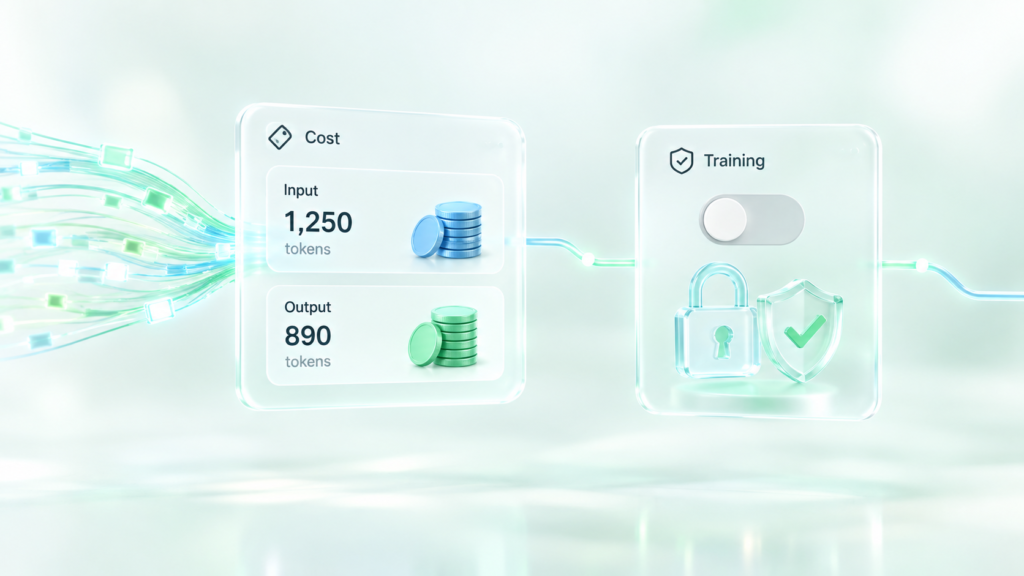
There are three entry points. The first is Meta's Model API, where Muse Wonder costs 4 dollars per million input tokens and 20 dollars per million output tokens, with 0.20 dollars per million for cached input and 2.50 dollars per thousand web search queries, according to the official pricing page. The context window is around one million tokens. TechCrunch notes that the price is comparable to models such as Claude Opus 5.5.
The second entry point is Muse Code, the terminal programming tool. According to VentureBeat, Wonder Full is not sold by the token and is only in the Muse Code plans of 50 dollars a month (Power Usage) and 200 dollars a month (Maximum Usage), both with usage limits. eesel AI's analysis also lists plans of 5 and 15 dollars that include Wonder but not Wonder Full. Those two prices should be taken with caution, because eesel sells a product of its own and I could only confirm the 50 and 200 prices with a second source. The third entry point is the Muse agent, which does not yet have a date or prices for Wonder.
How good is it compared with Claude, GPT, and Gemini?
The comparisons circulating come largely from Meta itself. TechCrunch reports that Wonder and Wonder Full achieve scores comparable to models such as Fable 5.1 and GPT-6 Astra, and that on MemoryBench, a memory test, Wonder beats those rivals. On the Artificial Analysis Intelligence Index, cited by VentureBeat, Claude Opus 5.5 scores 58, Wonder Full 56, GPT-6 Astra, Gemini 4 Argon, and Fable 5.1 score 53, and standard Wonder 52.
The honest reading is that Wonder competes in the upper range, but does not lead the aggregate index, and the strongest versions, such as Wonder Full, are not available through the API. VentureBeat also warns that Meta mixes its own evaluations, vendor supplied scores, and third party results, and that some coding comparisons use different tools. Meta's full safety report has not been published yet.
What data do you hand to Meta when using it?
This point matters a lot for an agency with clients under contract. In the API, Muse Wonder runs in Standard mode, and Meta states that your content is not used to train its models. Contributor mode, which lowers prices in exchange for Meta training on your content, is not available for Wonder in the API.
Muse Code subscriptions are a different story. VentureBeat reports that by default they use Contributor mode, which allows Meta to use what you submit to improve its models, although it can be turned off. If you work with client code, data, or documents, the prudent approach is to review that setting before starting and to prefer the API or a plan without training. Zero data retention is only available to qualified organizations, and it disables features such as built in web search and file upload.
What does it mean for a digital marketing agency?
The first practical effect is that Wonder is a raw material for building tools, not a ready made tool. Using it through the API requires someone to program the workflow, for example a dashboard that combines data from Meta Ads and Google Ads and generates a weekly report per client. An agency without developers gains nothing today from the API, and should wait for it to arrive in the Muse agent. None of the sources consulted mentions an integration with GoHighLevel, so that has to be verified before thinking about CRM workflows.
The second effect is that Wonder's advantage is not automatic. A multi client weekly report can also be built with Claude, GPT, or whichever model you already use, so the real question is whether Wonder is cheaper or performs better in that workflow, and only a test answers it. There are costs to consider: according to eesel AI, reasoning tokens are billed as output, reasoning cannot be fully turned off, and there is no batch discount. Meta, for its part, recommends human confirmation for important actions and acknowledges that the model can make mistakes on unfamiliar multi step tasks.
How should a marketing team test it?
The most sensible proposal is a small pilot with a repetitive and measurable task. Choose a workflow such as the weekly campaign summary, run it in parallel with the model you already use, and compare quality, errors, time, and cost over a month. Keep client data in Standard mode and leave actions with real effects, such as changing budgets or sending messages, under human approval.
Consider a typical case, not real data but an example of how it might look: an agency with one developer connects the Wonder API to a script that receives the weekly figures of three clients and drafts a five line summary per account, and for a month an analyst compares each summary against the one they would have written by hand to measure differences and time saved.
To see how the Muse agent compares with its OpenAI rival, review our comparison between Meta Muse and ChatGPT Dots. And if you want to connect AI agents to your Meta advertising accounts, we explain it in our blog on Meta's three MCPs.
Frequently Asked Questions
What is Muse Wonder?
It is the most capable AI model in Meta's Muse family, launched on October 12, 2026 in two versions, Muse Wonder and Muse Wonder Full. It is designed for personal and professional agentic tasks, with memory across conversations and sustained work toward a goal.
How much does Muse Wonder cost?
Through the API it costs 4 dollars per million input tokens and 20 per million output tokens. Wonder Full is only in the Muse Code plans of 50 and 200 dollars a month, and the Muse agent does not yet have a date or prices for Wonder.
Does Meta train its models on my data if I use Wonder?
In the API, in Standard mode, Meta states that it does not. Muse Code subscriptions use Contributor mode by default, which allows training on what you submit, although you can turn it off.
Can a marketing team use it today without programming?
Not directly. Today it is accessed through the API or Muse Code, which require programming knowledge. To use it without code, you have to wait for it to arrive in the Muse agent, which Meta announced as coming next.
Last updated: October 2026. This article will be updated when Meta publishes its full safety report and when Wonder reaches the Muse agent.