On August 3, 2026, TikTok integrated Dreamina Seedance 2.5, ByteDance's newest generation AI video model, into its Symphony suite, doubling the maximum length of an AI-generated video ad from 15 to 30 seconds and expanding the multi-modal references an advertiser can upload from 9 to 50. The timing could not be more contrasting: while TikTok bets harder on generative AI in its advertising creative, platforms like Snapchat, LinkedIn, Pinterest, and Meta have been adjusting their recommendation algorithms to favor human-made content, or adding tools to hold back what the industry now calls "AI slop."
This is not an accidental contradiction, it is a deliberate bet by TikTok in a direction where almost everyone else is retreating. This article explains exactly what changes with Seedance 2.5, why the rest of the industry is moving the opposite way, and what this divergence means for how you should think about your creative strategy on TikTok specifically, not on social media in general.
What is Dreamina Seedance 2.5 and what changes for AI video ads?
Dreamina Seedance 2.5 is ByteDance's newest generation of its AI video model, integrated into Symphony, TikTok's AI creative suite, to let advertisers generate clips of up to 30 seconds, double the 15 second limit the previous version allowed. TikTok describes this extra time as giving brands room to build "fuller narratives" that feel more native to the platform's creator-driven feed, instead of feeling like an ad forcibly compressed into too short a format.
This update arrives less than three months after the previous version of the same model entered Symphony, confirming an accelerated pace of improvement in TikTok's AI creative infrastructure. The update advances on three specific axes: duration, reference density, and rendering fidelity, each with different implications for how an ad gets produced.
What do the 50 multi-modal references and timestamped direction mean?
Multi-modal references are the images, videos, and audio clips an advertiser can upload to guide what the model generates, and Seedance 2.5 expands that limit from 9 to 50, a jump that qualitatively changes how much control a brand has over the final result. With more references available, an advertiser can maintain consistency of face, wardrobe, and lighting across different scenes within the same video, something that was much harder to achieve with only nine input references before.
The more significant change, however, is timestamped creative direction: an advertiser can now give the model very precise instructions about exactly what should appear at each moment of a 30 second video, instead of simply describing the whole scene and waiting for the result. This moves the tool from being a generic content generator toward something closer to an AI-assisted director, where the advertiser defines the script moment by moment and the model executes that direction with greater fidelity.
Why is the rest of the industry doing exactly the opposite?
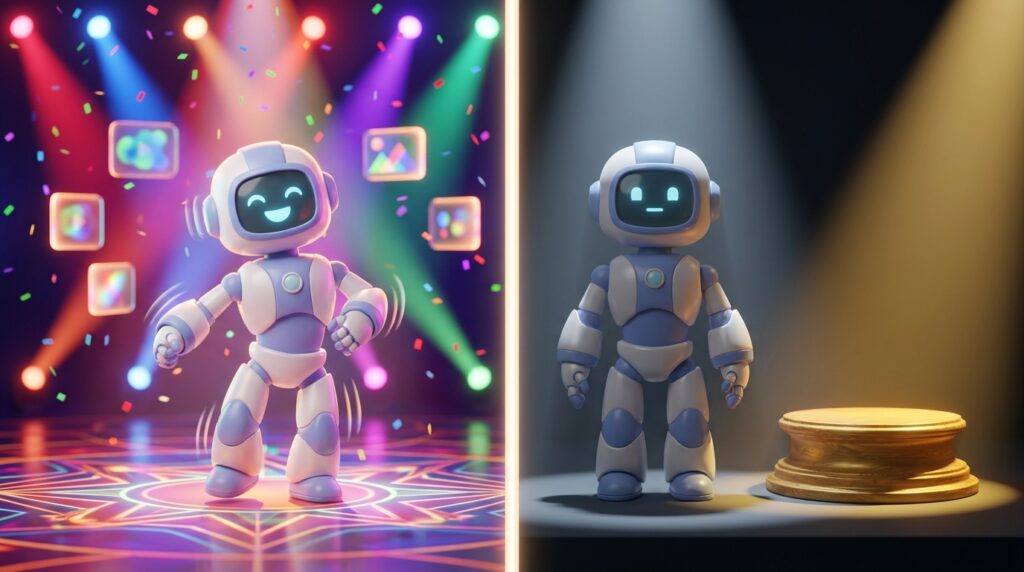
The rest of the industry is moving in the opposite direction because consumer backlash against synthetic content is real, measurable, and growing, and several platforms are already responding by adjusting their recommendation algorithms to favor human-made content, or by adding explicit tools to reduce the spread of low quality AI-generated material. Snapchat, LinkedIn, Patreon, Substack, Meta, and Pinterest have all taken some version of this step in recent months, in a context where research shows audiences are detecting AI-generated video with increasing accuracy.
TikTok is betting on the opposite: more duration, more creative control, easier generation, right as its direct competitors reduce exposure to that same type of content. It is worth noting a timing detail that is not coincidental: this update landed one day after the European Union's AI transparency obligations became legally binding, placing the launch's timing within an active regulatory context, not a vacuum.
This divergence does not necessarily mean TikTok is wrong and the rest of the industry is right, or the other way around. It means the correct strategy for your brand on TikTok specifically can be different from the correct strategy on other platforms, and treating "AI content" as a single decision that applies the same way across every channel is no longer a safe simplification.
How does this connect with what we already know about AI creative quality?
This update connects directly with two things we have already documented. We already covered how TikTok banned AI voices in shopping livestreams while simultaneously launching Symphony Agent, the AI that generates full video campaigns: the same tension between restricting AI where it breaks trust and expanding it where it does not shows up again here, except this time the contradiction is not internal to TikTok, it is between TikTok and the rest of the market.
We also documented, based on the WARC, TikTok, and LIONS Advisory report, that more AI-generated content volume does not mean better quality, and that the real advantage comes from feeding AI with real community signals, not from generating faster. Seedance 2.5 gives an advertiser more technical production capacity (more duration, more references, more timestamped control), but that technical capacity still does not solve the underlying problem that report identified: the quality of the result depends on how well informed the brief feeding the model is, not on how many seconds or references the tool has available.
Where can you access this, and how available is it really?
Seedance 2.5 is available for now only to a select group of paid advertisers in specific markets, with TikTok not naming those markets, publishing a rollout timeline, or confirming whether the capability carries an additional cost. Access runs through the creation flow inside Symphony Creative Studio and through Symphony features inside TikTok Ads Manager, and it is also available through Smart+ with Symphony Automation, where the system selects and generates content in a fully automated way.
One technical detail worth knowing if you already use these tools: assets generated within this environment move directly into live campaigns without needing to be exported and re-uploaded separately, which reduces operational friction but also means there are fewer natural steps where someone reviews the result before it goes live. If your account does not have access yet, it does not mean the feature is not coming, it means you are still outside the initial group of selected advertisers while the rollout continues.
What should you do with your creative strategy now?
Before assuming that more duration and more references automatically produce better ads, apply the same principle we already documented about creative quality: feed the model specific information about your real audience, not just more generic visual references. Thirty seconds with timestamped direction gives you the technical capacity to tell a fuller story, but that story only works if it is grounded in something your real audience is already telling you matters, not in a generic idea of what should work.
If you manage accounts across several platforms at once, keep in mind that the AI content stance that works on TikTok may not be the same one that works on other networks where you manage the same client. Applying a single policy of "we use generative AI for everything" or "we avoid generative AI for everything" without differentiating by platform ignores a real divergence the industry itself is showing right now.
To size this with an illustrative example, not real data but a typical scenario, imagine a brand managing presence on both TikTok and LinkedIn for the same product. On TikTok, it takes advantage of Seedance 2.5 to produce a 30 second ad with a fuller narrative, informed by real community signals about its audience. On LinkedIn, where the platform is adjusting its algorithm to favor human-made content, the same brand prioritizes a more traditionally filmed video. The decision is not "AI yes or no" in general, it is a specific, per-platform decision based on where each one is actually heading.
At JP Director we treat each platform according to its own real direction, not according to a single rule about generative AI applied equally across every channel. Where TikTok expands AI creative capability, we test it with judgment and with real audience signals behind it. Where another platform moves toward more human content, we adjust production accordingly.
Frequently Asked Questions
Is Seedance 2.5 already available to any TikTok advertiser?
Not yet. TikTok initially rolled it out only to a select group of paid advertisers in specific markets, without naming those markets or publishing a general availability timeline. If your account does not have access yet, check directly inside Symphony Creative Studio or TikTok Ads Manager to confirm the current status, since the rollout continues to expand progressively.
Why is TikTok expanding its AI tools while other platforms are limiting them?
TikTok is betting on giving advertisers more technical production capacity with AI, while platforms like Snapchat, LinkedIn, Pinterest, and Meta have been adjusting their algorithms to favor human-made content in response to growing, measurable consumer backlash against low quality synthetic content. Neither direction is necessarily wrong; they reflect different strategies toward the same technology, and the right decision for your brand can vary depending on which platform you are operating on.
How many references can I upload with Seedance 2.5, and what do they control exactly?
Seedance 2.5 lets you upload up to 50 multi-modal references (images, video, and audio), up from the 9 the previous version of the model allowed. These references help maintain visual consistency, such as face, wardrobe, and lighting, across different scenes within the same ad, and can be combined with creative direction applied to specific timestamps to control exactly what appears at each moment of the video.
Do more duration and more references guarantee a better ad?
Not automatically. The technical capacity to produce a longer video with more control does not by itself solve the underlying problem identified by the WARC, TikTok, and LIONS Advisory report on creativity in the age of AI: the quality of the result depends on how well informed the brief feeding the model is with real audience signals, not just on how many seconds or technical references the tool has available.
Last updated: September 2026. Seedance 2.5 remains in limited rollout and its availability may change; verify the current status directly in Symphony Creative Studio or TikTok Ads Manager before planning a campaign around this feature.