
On June 12, 2026, Meta suffered a massive outage that knocked millions of Facebook, Instagram, WhatsApp, and Messenger users offline worldwide. The disruption began around 9:30 a.m. ET and simultaneously hit server authentication infrastructure, advertising tools, and business APIs — affecting both individual users and active advertisers.

What Exactly Failed Across Meta's Platforms
The Meta global outage of June 12, 2026 played out differently depending on the platform. On Facebook, users were abruptly logged out without warning and could not sign back in — attempts returned "unexpected error occurred" messages or a blank white screen. On Instagram, feeds stopped loading, images and videos failed to display correctly, and both the mobile app and desktop version showed the "Something went wrong" error. On WhatsApp, users reported intermittent disruptions sending and receiving messages, though the impact was less severe than on Facebook.
Cisco ThousandEyes, a network intelligence platform, confirmed "internal server errors and timeouts" in Meta's backend services, while network connectivity to Meta's frontend servers remained unaffected. This indicates the failure was not a network infrastructure issue but rather a problem in internal authentication layers or service configuration.
For teams like those managed by JP Director, identifying these signals early allows for continuity decisions before active campaigns are compromised.
Why Users Were Unexpectedly Logged Out
The mass logouts experienced by Facebook and Instagram users on June 12 are consistent with a failure in Meta's backend authentication infrastructure . When this system fails, active sessions are invalidated in bulk and re-authentication attempts enter an error loop because the service responsible for validating credentials is unresponsive.
This pattern was already documented in the March 2024 and December 2024 outages, where Meta's web servers remained accessible but the backend could not process login requests. Unlike the infamous 2021 outage — caused by a BGP configuration failure in backbone routers — Meta's more recent disruptions, including June 2026, point to issues in shared microservices or internal authentication layers.
The problem cannot be fixed by clearing cache or restarting a device: it is a server-level failure that requires a fix from Meta's own infrastructure.
The Impact of Meta's Outage on Advertisers and Businesses
The impact on business tools was immediate and severe. Meta's official status page registered high disruptions across Facebook Ads Manager, Meta Business Suite, Messenger Platform, WhatsApp Business Platform, and the Marketing API. Specifically:
- Ads ManagerHigh disruption in ad creation, editing, delivery, and reporting
- Marketing APIMedium disruption, affecting integrations and automations
- Meta Business Suite: High disruption in centralized management
- WhatsApp Business Platform: High disruption in business messaging
- Messenger Platform: High disruption
This meant that during the outage window, live ads stopped delivering and teams were unable to edit or pause active campaigns. According to an Ad Status Monitor analysis cited by TechTimes, Meta recorded over 60 Ads platform outages between October 2024 and March 2026, with frequency increasing 316% from early to late 2025.
At JP Director, whenever Meta Status signals any disruption indicator, the immediate protocol is to document the failure timestamp, pause high-budget campaigns, and activate alternative communication channels with active clients.

Who Is Responsible for Meta's Issues and What the Company Said
Meta acknowledged the outage through its official account on X. Andy Stone, Meta's VP of Communications, posted: «We're aware people are currently having trouble accessing our services. We're working on it.» The company offered neither a technical explanation nor a resolution timeline.
This lack of structured communication is a recurring issue: Meta does not maintain a public status dashboard for its consumer apps (Facebook, Instagram, WhatsApp), unlike competitors such as Google, which publishes a 99.9% uptime commitment for its advertising products. Technical responsibility falls on Meta's engineering teams, but the absence of SLAs (service level agreements) for advertisers means there are no formal guarantees of compensation or committed restoration times.
The pattern is consistent: recovery happens region by region, with some geographic areas regaining access before others. By 10:40 a.m. ET on the same day, Facebook and Instagram began restoring access across the United States.
Implications of Meta's Outages for Your Digital Strategy
Meta's recurring failures expose a structural dependency that every digitally active business must evaluate. The track record is extensive: significant outages in February 2024, March 2024 (Super Tuesday), April 2024, December 2024, March 2026, and May 2026 — plus the global incident of June 12, 2026.
The strategic implications are straightforward:
Active channel diversification:A strategy that concentrates 100% of ad spend in Meta comes to a halt during outages. Platforms like Google Ads, TikTok Ads, or LinkedIn Ads can absorb emergency budget.
Proactive status monitoring: Tools like DownDetector, StatusGator, or IsDown detect disruptions before Meta officially acknowledges them, with detection windows of up to 3.6 hours ahead of vendor confirmation.
Automated pause protocols: Setting alert thresholds in campaign management tools to automatically pause delivery when platform anomalies are detected.
Proactive client communication: When Meta channels go down, brands need other active touchpoints ready: email, website, WhatsApp Business (if unaffected), or SMS.
At JP Director, analyzing these outages is part of the digital ecosystem audits we conduct for clients with active Meta ad spend — ensuring that no platform disruption puts campaign results at risk without a contingency plan already in place.
Outages in Social Media Companies: Is It Only Meta?
No, though Meta concentrates the largest-scale incidents given the volume of users it handles. During the week of June 9–12, 2026, Google Workspace also experienced disruptions (Gemini App errors lasting 7 hours on June 10), along with instability signals across other major global digital platforms.
Outages at large social media platforms share common root causes: backend infrastructure misconfigurations, authentication layer failures, microservice updates with cascading effects, or failures in shared cloud services. Meta's scale — managing over 3 billion daily active users across interconnected services — amplifies the impact of any single point of failure in shared infrastructure.
For businesses, this reframes the question: it's not whether Meta will go down again, but when — and whether there's a response plan ready.
Frequently Asked Questions About Meta's June 2026 Outage
Why did Meta go down on June 12, 2026?
The June 12, 2026 outage was caused by a failure at Meta's backend server level, consistent with problems in internal authentication infrastructure. The symptoms — mass logouts and error loops when attempting to sign back in — match the pattern documented in previous outages in March and December 2024. Meta did not disclose the specific technical cause.
How long did the Meta outage last in June 2026?
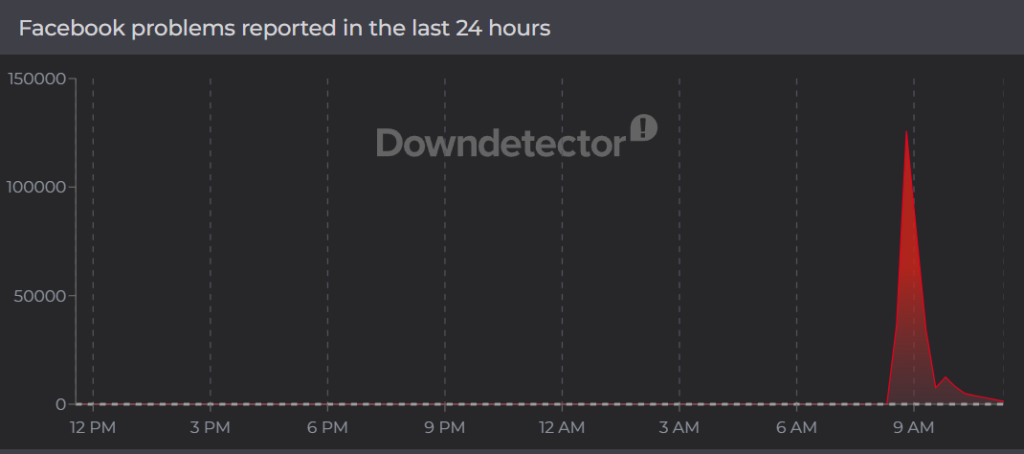
Reports of issues began around 9:30 a.m. ET and surpassed 120,000 affected users by 10:00 a.m. ET. By 10:40 a.m. ET, Facebook and Instagram began recovering in the United States, though full restoration rolled out gradually by region throughout the morning. Some business tools, including Ads Manager, were still reporting high disruptions past midday.
What should I do if Meta Ads Manager fails during an active campaign?
When Meta Ads Manager goes down, the immediate steps are: check the official status at metastatus.com, document the failure time with a screenshot, pause high-budget campaigns if possible, activate alternative advertising channels, and notify affected clients with a contingency update. Meta does not offer automatic compensation for delivery interruptions, so documenting the incident is essential for any subsequent claim.
How often does Meta go down?
According to Ad Status Monitor data, Meta recorded over 60 outages on its ads platform between October 2024 and March 2026, with frequency increasing 316% throughout 2025. In 2026 alone, partial outages were documented in March, Ads platform instability over multiple days in May, and the global outage on June 12.
Why doesn't Meta have a public status page for users?
Meta does not maintain a real-time status dashboard for its consumer apps (Facebook, Instagram, WhatsApp), unlike its business tools. This forces affected users to rely on third-party platforms like DownDetector or alternative social networks (primarily X) to confirm whether a disruption is widespread. The company also does not offer SLAs to advertisers, which distinguishes it from platforms like Google Ads in terms of formal availability commitments.