On October 6, 2026, during Advertising Week New York, Meta announced a batch of artificial intelligence tools for Meta Ads. The most relevant for anyone running campaigns are a business assistant inside Ads Manager that could change budgets and audiences with natural language instructions, video generation from static images in Advantage+, and a customer lifecycle strategy available to all advertisers. Not everything is live yet, so it pays to separate carefully what you can already use from what Meta is still testing.

What did Meta announce at Advertising Week 2026?
According to Social Media Today, Meta introduced improvements to its AI business assistant, the expansion of Ads Creative Studio, new video generation capabilities, an expansion of its Ads MCP server, and direct purchase options inside its messaging platforms. Relevant Audience's coverage, published on October 8, sorts those updates by status, which is the most useful part: some are available, others are rolling out gradually, and others are in testing.
One general warning before going into detail. Meta gave no launch dates beyond the word soon for several features, and it did not clarify which countries have access. The most sensible approach is to check your own Ads Manager before planning a campaign around any of these tools.
What will the AI assistant do inside Ads Manager?
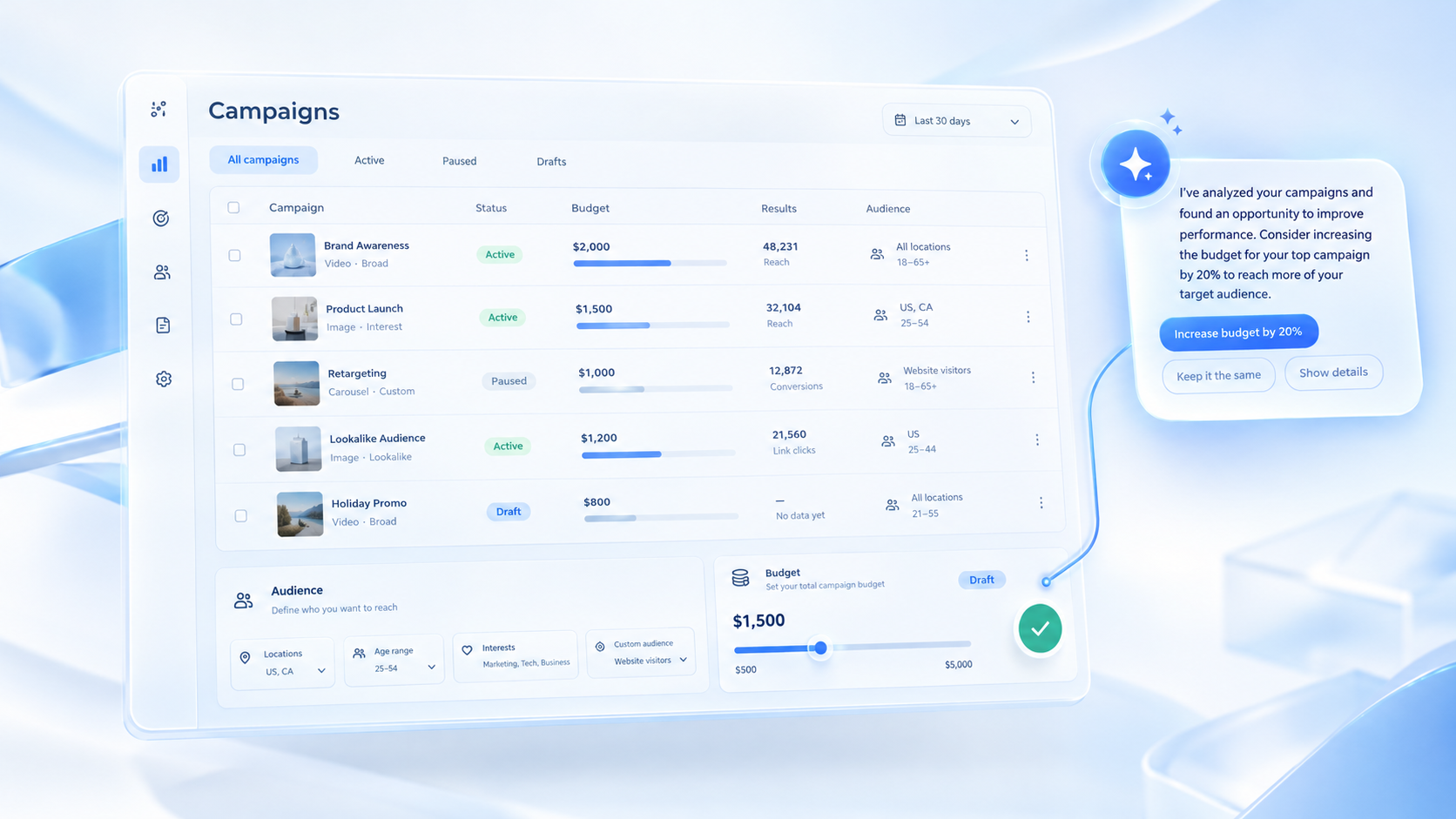
The business assistant already existed as a guide for creating ads. What is new is that Meta adds memory and context to it, so it takes into account what you tried last quarter, your seasonality, and the goals you described. The most striking part is the agentic actions, meaning the assistant changes budgets, adjusts audiences, and sets up campaigns from a conversation.
Here the sources differ. Relevant Audience indicates that those actions are in testing and that Meta promises them as coming soon, while an agency such as Common Thread Collective describes them as if the assistant could already make direct changes in the account. Social Media Today does not clarify the status. Until there is confirmation inside your account, the prudent assumption is that they are in testing. Scheduled tasks, such as recurring reports and alerts, and the ability to import strategy and brand voice guidelines from other AI tools are also in testing.
What does Meta say about its results?
Meta claims that advertisers using the assistant see about 5% more conversions at the same cost per conversion. Relevant Audience points out that this figure comes with no published method, period, or industry, so it does not work as a basis for projections. The agency Common Thread Collective also speaks of an estimated 60% reduction in campaign launch time, but that is an estimate based on early tests with partners and not a measurement across real accounts.
The practical recommendation is to measure on your own. If you turn on any of these features, compare periods or use a control group before crediting the assistant with results, and start with a low risk campaign instead of opening all your accounts to it.
What is already available to everyone?
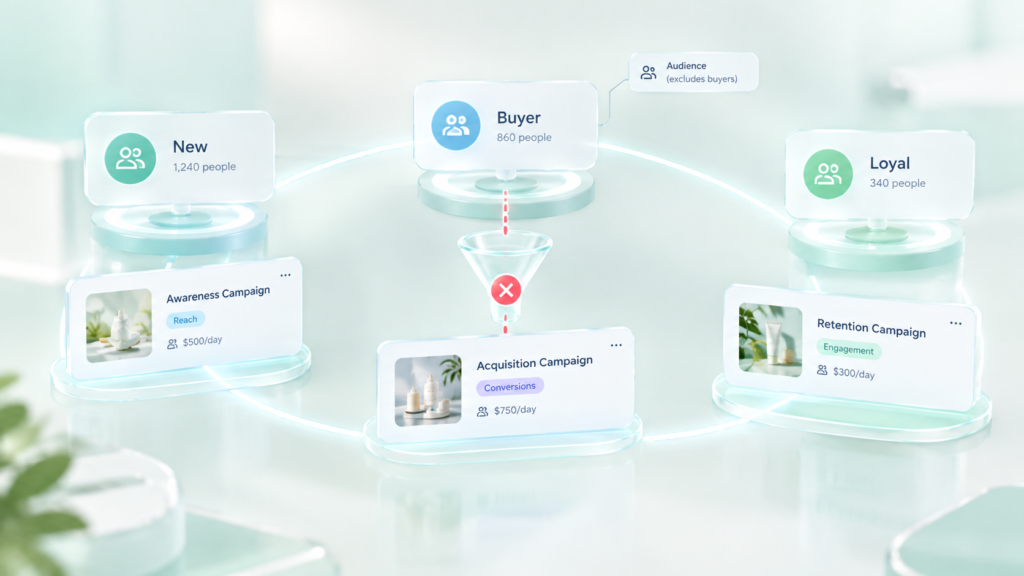
There are two updates that Meta describes as available. The first is video generation from static images inside Advantage+ creative, which is now generally available. For a store with a photo catalog, it is a way to test video formats in Reels or Stories without producing every piece from scratch. The second is Customer Lifecycle Strategy, now available to all advertisers, which lets you define the target audience of each campaign so that Meta's recommendations follow that focus.
In connection with this, Meta recommends excluding existing customers when you launch an acquisition campaign, and it is testing an audience label to exclude a whole group of customers in a single step. If your acquisition and remarketing campaigns run in parallel, it is a good moment to check that they are not overlapping.
What is in beta or testing?
Ads Creative Studio, which was previously limited to certain partners, is expanding gradually to more advertisers, so your account may not have it yet. Video generation from the product catalog is in beta for eligible advertisers. And in commerce, Meta is testing direct purchase in Messenger through Meta Business Agent with Shopify, as well as direct purchase inside Meta AI with Adyen, PayPal, Shopify, and Stripe, with tests starting this fall.
Meta also announced AI audience discovery inside detailed targeting for the end of 2026. On the Ads MCP server, which we explained in another article, Meta says it now supports more workflows, such as uploading creatives, viewing previews, and tracking performance, with ten partners integrated, including Kochava, Snowflake, and Triple Whale. Work created by an agent arrives as a draft in Ads Manager and every action requires permissions and approval defined by the advertiser.
What happens with Meta's new terms on October 30?
Apart from the tools, Meta will update its commercial and ad terms effective October 30, 2026. According to Digitale by Likita's review, there are four documents: the Commercial Terms, the Product Catalog Terms, the Self-Serve Ad Terms, and the Generative AI Terms for creatives, and the change Meta states explicitly is that the AI terms become part of the main ad agreement.
The sources differ on the scope. Common Thread Collective argues that Meta can run tests without notice, that the advertiser is responsible for AI generated content even with Meta's own tools, and that Meta obtains broad rights to crawl the advertiser's site. Digitale by Likita confirms the advertiser's responsibility and the permission to access and crawl domains for development and training purposes, but does not state that tests happen without notice. None of this replaces reading the official terms or getting legal advice, and this article is not meant as legal counsel. What is useful for now is to keep a record of which creatives used AI and to avoid putting personal data into prompts for AI tools.
How should an agency or business test it?
Start with what is available and low risk: test video generation from images in a campaign with a bounded budget and review the exclusion of existing customers in your acquisition campaigns. For the assistant, wait until it appears in your account, start with a small campaign, and review what it proposes before allowing direct changes.
Consider a typical case, not real data but an example of how it might look: an online store for a Hispanic audience in the United States that sells two products keeps an acquisition campaign and a remarketing campaign. It reviews its audiences, excludes buyers from the last 90 to 180 days from the acquisition campaign, and compares the cost per purchase of the following two weeks against the previous two.
If you are interested in connecting AI agents to your Meta accounts, we explain it in our blog on Meta's three MCPs. And to see how Meta is pushing creator content in its ads, review our analysis of Instagram Live Video Ads and the Creator Marketing Hub.
Frequently Asked Questions
What did Meta Ads announce at Advertising Week 2026?
On October 6, 2026, it introduced improvements to its AI assistant for Ads Manager, video generation from images in Advantage+, Customer Lifecycle Strategy for all advertisers, an expansion of Ads Creative Studio and the Ads MCP server, and direct purchase tests.
Can Meta's AI assistant already change my budget?
According to Relevant Audience, the agentic actions, such as changing budgets and audiences, are in testing and Meta promises them as coming soon. It is worth confirming in your own Ads Manager account before counting on them.
What is Customer Lifecycle Strategy?
It is a tool, now available to all advertisers, that lets you define the audience of each campaign so that Meta's recommendations follow that focus. Meta suggests excluding existing customers in acquisition campaigns.
What changes on October 30 in Meta's terms?
Meta updates four commercial and ad documents, and incorporates the generative AI terms into the main ad agreement. The sources differ on some of the scope, so it is worth reading the official terms that day.
Last updated: October 2026. This article will be updated when Meta confirms dates and countries for the assistant's agentic actions and when the new terms take effect.