
Black Friday falls on November 27, 2026. Adobe forecasts that U.S. online sales that day will reach $12.9 billion, up 9.2% from last year. What is new this season is how shoppers arrive. Adobe expects traffic to stores from AI tools to rise 95% that day compared with 2025. This guide explains how to get ready for Black Friday with artificial intelligence. It reviews what the data says, where its limits are and what to do in the 11 days that remain.
We could not open eMarketer's full note on the Bain and PwC surveys, so we cite those figures as the outlet summarizes them. We also could not open the full Salesforce post behind a customer service figure. When something is a forecast or a claim from a company that sells software, we say so.
How Much Will AI Traffic to Stores Grow on Black Friday 2026?
Adobe forecasts 130% growth across the season, with 159% on Thanksgiving, 95% on Black Friday and 88% on Cyber Monday. That comes from its September 28 press release. Adobe measures this traffic as shoppers clicking from AI chat and browser services to U.S. retail sites. The forecast draws on more than one trillion visits, 100 million products and 18 categories. It covers November 1 through December 31.
Read those percentages with care. Relevant Audience points out that the release does not say what share of total traffic AI represents. A 95% jump can therefore start from a small base. Last year Adobe reported an 805% increase on Black Friday, according to CommerceNext. That suggests the pace cools as the base grows. The direction matters more than the exact number, and these are projections, not results.
Adobe also surveyed 5,000 consumers in July. Among those who have used AI to shop online, 77% say they feel more confident in their purchase. Another 69% say they are less likely to return what they bought. It is Adobe's own survey, and Adobe sells analytics and marketing software. It measures perceptions, not actual returns.
How Many Shoppers Will Use AI This Season?
Anywhere from a quarter to more than half, depending on who asks and how they define use. According to eMarketer's summary, Bain found that one in four online shoppers plans to start holiday shopping on a platform such as ChatGPT, Gemini or Claude. Another 13% will use retailers' own agents. PwC found that 29% expect to use AI at some point, up from 22% in 2025.
BCG says 56% plan to shop with generative AI this Black Friday, up from 51% in 2025 and 35% in 2024. Shopify, which sells online store software, cites 65% using AI for at least one shopping task. The gap between figures probably comes from the question. Starting a journey in an AI is not the same as using it once to compare prices.
Will AI Agents Buy for Your Customers on Black Friday?
Not at scale, and this year's evidence points that way. In March, OpenAI pulled back Instant Checkout, the feature that let people pay inside ChatGPT. According to CNBC, as relayed by Retail Insight Network, it moved to a model where stores build their own apps and the payment finishes on the merchant's site. Stellagent, citing a Forrester analyst, says only about 30 Shopify merchants took part in February. That figure is secondhand.
Google took another route. On October 15 it launched Universal Cart in Search and the Gemini app, with checkout built on its Universal Commerce Protocol. According to MediaPost, the merchant stays the seller of record and keeps its data. PPC Land reports that Nike, Sephora, Target, Ulta Beauty, Walmart, Wayfair and many Shopify merchants are among the places to try it. Meta also introduced Muse in September, and CX Network says it can look for deals and track prices.
Still, trust lags behind supply. According to Shopify, only one in three shoppers says they trust an agent to buy for them. Diginomica published an analysis on November 3 whose headline says there will be no agentic shopping frenzy this holiday season. And Shopappy, a payments analysis site, predicts agent-completed purchases will stay in the low single digits. That is a prediction, not data.
How Do You Get an AI to Understand and Recommend Your Products?
With clear, complete and consistent information everywhere your business appears. Shopify recommends stating what you sell, who it is for and why customers can trust your brand. It also suggests writing down the reasoning behind your price, because agents compare mostly on price. And it proposes describing the problem your product solves in a customer's own words.
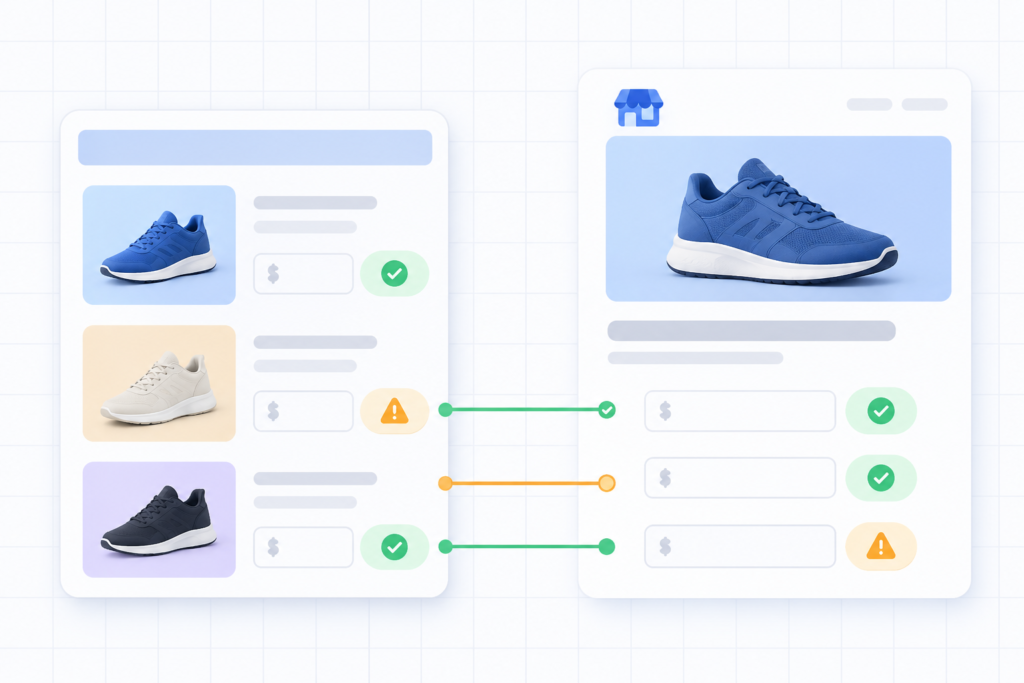
There is a practical risk. TechWyse explains that an error in a product feed can limit what an AI system has available to understand or show your catalog. If the price or stock in your feed does not match your site, an AI could cite stale data. That would happen on the day it matters most. Shopify adds that you should compete on value, not only on discounts, because shoppers weigh whether a product fits what they need.
Where Does AI Actually Help a Business During Black Friday?
Today it helps more in customer service than in the purchase itself. According to eMarketer, citing Salesforce, AI and agents influenced 20% of global retail sales last season. But they were used far more to serve customers than to assist shopping. Salesforce is a software vendor, so the figure reflects its own measurement.
The channel mix is shifting too. Adobe expects affiliates and partners, which include influencers, to gain 12% in revenue share. Social media would gain 17%, against 4% for paid search. For a small business, that suggests short video and creator partnerships deserve budget next to search ads. Adobe also expects discounts of up to 30% during Cyber Week, with the best deals on TVs, toys, apparel, appliances and furniture landing on Black Friday.
What Should You Do This Week to Get Ready for Black Friday With Artificial Intelligence?
These are our team's recommendations, not instructions from the platforms. First, ask ChatGPT, Gemini and Perplexity about your business and products the way a customer would, and save the answers. If any shows old hours, prices or policies, fix the source before Thursday the 26th. That is the day the biggest jump in AI traffic is expected.
Second, check that the price, stock and shipping in your Google Merchant Center feed or store match your site. Third, publish a clear page with your offer terms: dates, what is included, return windows and shipping cost. Fourth, create a segment in your analytics for traffic from AI assistants, such as chatgpt.com or perplexity.ai. That way you will measure how many clicks and sales they bring.
Fifth, segment your email list so you do not send everyone the same message, something Salesforce also recommends to small businesses. Sixth, have answers ready on your site and in your chat for what people will ask most, such as shipping, exchanges and stock. And seventh, decide in advance how far you will cut prices, because competing on discounts alone erodes your margin when agents compare prices quickly.
Consider a typical case, not real data but an example of how it would look. A candle shop in Ohio asks Gemini about its best seller and finds it cites a price from six months ago. It checks its feed, fixes the price and publishes a page with its Black Friday offer terms. It notes the date of the change and asks again a week later to see whether the answer reflects the new data.
What Don't We Know Yet About Black Friday 2026?
Several answers are missing, and some figures disagree. Adobe forecasts $12.9 billion for Black Friday, but Talk Business reports a different forecast of $13.4 billion. There are no results yet. We also do not know what share of sales will come from AI, because Adobe's forecast measures clicks, not orders.
Nor do we know how many purchases agents will complete. The only estimates we found are third-party predictions, and the exit of Instant Checkout is a signal for caution. The verdict will come with the December and January numbers, and this article will be updated when they exist.
When Is It Worth Getting Help With Black Friday With Artificial Intelligence?
When you have a large catalog, several sales channels or little time to review feeds, offer pages and campaigns. An experienced team can audit what AI says about your business and organize your data. It can also prepare ads and content for Black Friday week. If you want help with Black Friday with artificial intelligence, you can contact the JP Director team.
This topic connects with others we have published. To see how ChatGPT shows and verifies businesses, read our analysis of the business profile in ChatGPT.
Frequently Asked Questions
When is Black Friday in 2026?
Friday, November 27. Thanksgiving is Thursday the 26th, Small Business Saturday is the 28th and Cyber Monday is Monday, November 30.
How much will AI traffic to stores grow?
Adobe forecasts 95% more on Black Friday and 130% across the season. These are projections based on clicks from AI services, and the release does not give AI's share of total traffic.
Will AI agents buy for my customers?
Some will, but most purchases are not expected to work that way. OpenAI pulled payments inside ChatGPT in March and Google launched Universal Cart on October 15. According to Shopify, only one in three shoppers trusts an agent to buy for them.
What should a small store check first?
That its price, stock and shipping terms match across its feed, its site and any listing. Then ask several AI tools about your business and fix whatever is out of date.
Last updated: November 16, 2026. This article will be updated with Black Friday and Cyber Monday results once Adobe and other sources publish them.