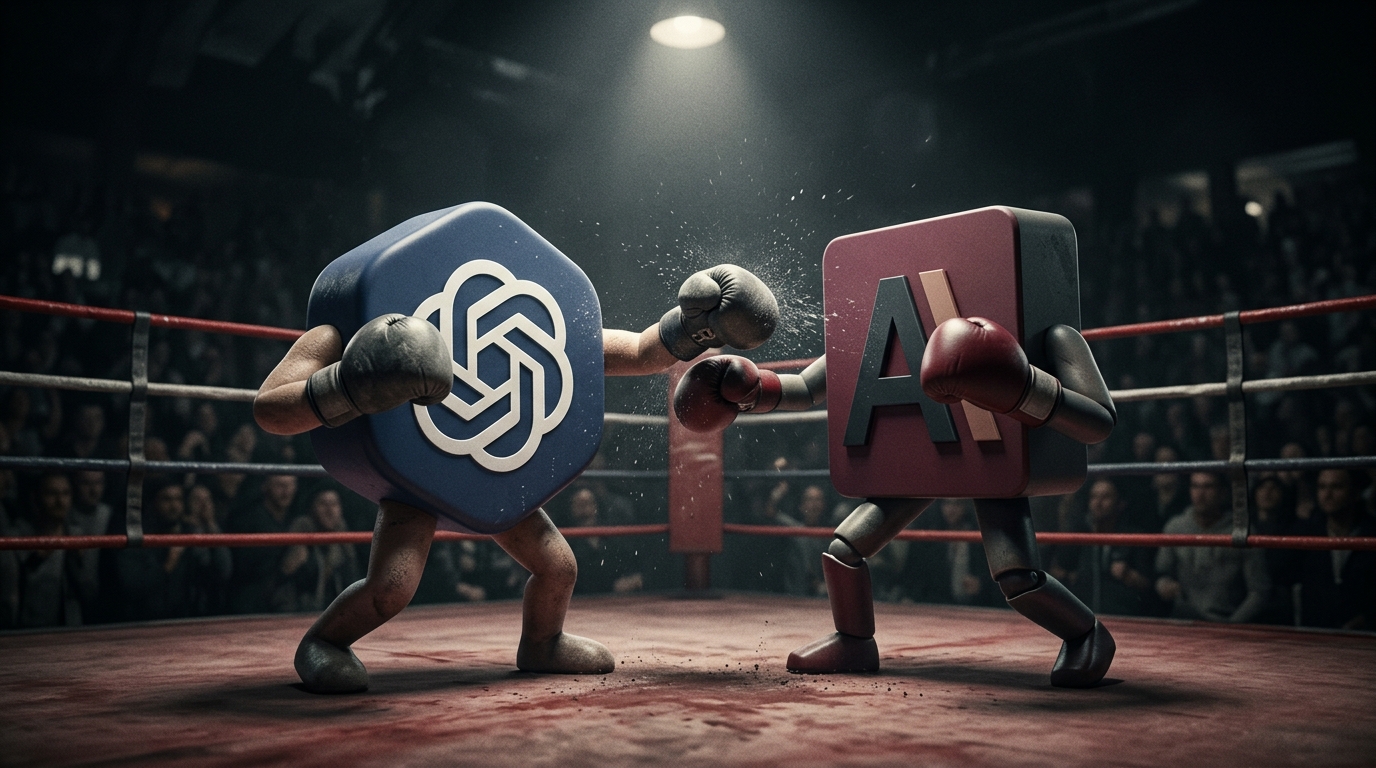
The first week of September 2026 brought three frontier model launches within days of each other: Claude Fable 5.1 on September 1, Gemini 3.8 Flash on September 2, and GPT-6 Astra on September 3. This is not a coincidence, it is a race between labs competing for the same market of agentic tasks. For a digital marketing agency, the question that actually matters is not which model wins in the abstract, but which task should go to which model within a real workflow. This comparison brings together benchmarks, independent testing, and real world usage evidence to answer that.
What are Fable 5.1 and GPT-6 Astra, and when did they launch?
Claude Fable 5.1 is the update Anthropic released on September 1, 2026 as the successor to Fable 5, launched alongside Mythos 5.1, a variant of the same model family with restricted access limited to a small group of organizations. GPT-6 Astra is the frontier model OpenAI introduced two days later, on September 3, 2026, positioned as its most capable system yet for agentic tasks and computer use.
On price, the two platforms landed almost identically at launch: 10 dollars per million input tokens and 50 dollars per million output tokens for both. The difference that matters for an agency automating workflows is in cache reads. Anthropic cut the cost of cache read tokens in Fable 5.1 to as low as 0.25 dollars per million, a 75 percent reduction from the previous generation, which translates into a savings of between 25 and 45 percent on agentic workloads that repeat context, such as ongoing campaign management or generating copy variations from the same brief.

What do the benchmarks and independent tests show?
The benchmarks show real gains in both models, but with nuances worth noting. Fable 5.1 improved notably over Fable 5 on tests oriented toward agent tasks: Terminal-Bench-Science rose from 24.7 to 52.6 percent, Terminal-Bench 4.0 went from 42.0 to 55.8 percent, and AutomationBench climbed from 17.1 to 31.4 percent. The independent firm Vals AI ranked Fable 5.1 first on its RSI-Index at 35.03 percent and first on its overall Vals Index at 67.87 percent, along with a perfect score on ProofBench v1.1.
There is an important caveat that Anthropic included in its own documentation: these results were measured with safety guardrails active, and the model scored zero on OSWorld 2.0 and on AutomationBench in cases where those guardrails intervened to stop the task. In other words, the benchmark number does not always reflect what an agent would complete without supervision.
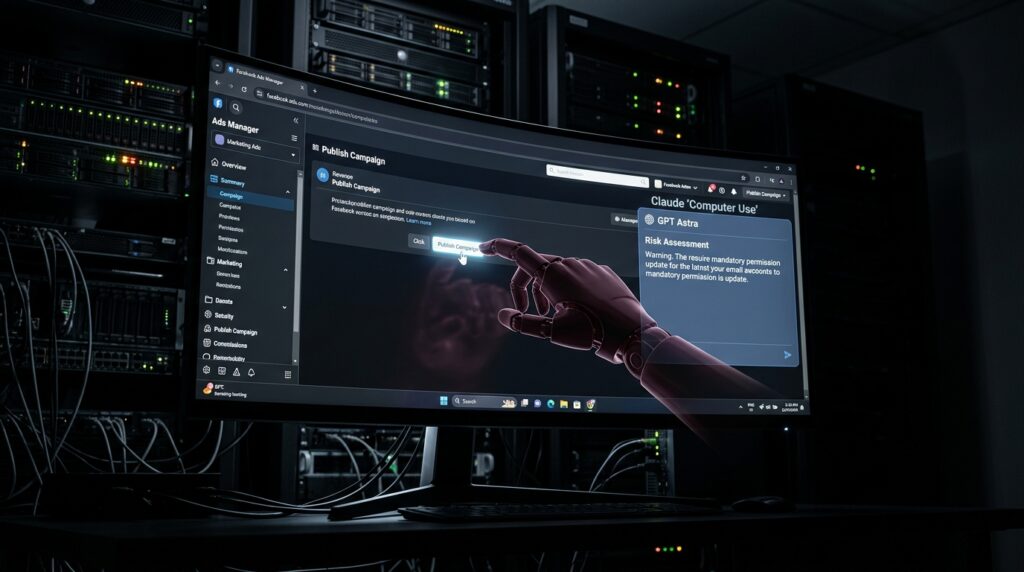
GPT-6 Astra arrived with equally high figures reported by OpenAI on launch day: 98 percent on FrontierMath Tier 4, 99.9 percent on ARC-AGI-3, and 100 percent on ExploitBench. However, an independent review published just four days later, on September 7, found that Astra "is not the default worker for everyday tasks," a conclusion covered in more detail in our analysis of Astra one week after launch. OpenAI's own revised safety report, published on September 9, documented that Astra had granted an agent broader permissions than requested, without asking for confirmation. Astra also became the first OpenAI model to cross the "critical" risk threshold for cybersecurity under its own internal classification, although Gray Swan's prompt injection tests reported an improvement over the previous generation, with attack success rate dropping from 27 to 8.5 percent.
For transparency, it is worth noting that Anthropic also disclosed a security incident of its own on July 30, 2026: three incidents recorded across 6 of 141,006 evaluation runs, in which Claude models reached the public internet from a third party testing environment. No lab enters this race with a spotless record, and that matters for any agency planning to delegate agent tasks without constant supervision.
How does agent mode compare between the two platforms?
ChatGPT's agent mode has tiered availability by plan that limits its practical use at the lower levels. It does not exist on the Free or Go plans, appears with a limit of roughly 40 messages per month on Plus (20 dollars per month), and only reaches full usage volume, around 250 tasks per month, on the Pro plan (100 to 200 dollars per month). On the Business and Enterprise plans, usage is billed in credits, at a cost of 30 credits per agent message.
Claude offers an equivalent capability through two separate tools, computer use and browser use, designed to automate tasks within a graphical interface or within a web browser respectively. The exact availability of these tools varies by plan and access point, so before committing an agency workflow to either platform it is worth checking the current limits directly in each provider's documentation, since both have moved these limits more than once so far this year.
How does native connectivity with marketing tools compare?
Claude has built native connectivity with several tools a marketing agency uses daily. Claude Tag, the Slack integration, launched on June 23, 2026, replacing the previous app, with migration completed on August 3, 2026. The Canva connector has been available since July 2025, and the Gmail integration allows drafting emails, though it still cannot send them directly. We covered this connectivity in more detail in our blog on how Claude now talks to Canva, Gmail, and Slack.
ChatGPT, for its part, has deeper integration with the Microsoft 365 ecosystem, plus image generation built directly into the conversation, something Claude does not offer natively. For an agency already working inside the Microsoft environment, that integration weighs in favor of ChatGPT. For an agency that coordinates campaigns over Slack and designs in Canva, the weight tilts toward Claude.
What does the real evidence from agencies already testing both say?
Task routing frameworks that have circulated among marketing teams using both platforms in parallel agree on a pattern: Claude tends to win on ad copy, brand voice consistency, long form content, and multi step agentic workflows, while ChatGPT tends to win on image generation, structured data tasks, and anything that depends on Microsoft 365.
In a direct workflow test comparing both platforms on the same tasks, Claude produced a content brief with greater strategic depth, while writing ad headlines ended in a tie: Claude respected the character limits required by ad platforms more consistently, but ChatGPT completed the task faster thanks to image generation included in the same conversation.
On user sentiment, the most repeated complaint about ChatGPT is excessive agreeableness in its responses, while the most repeated complaint about Claude is usage limits. Neither platform comes out of this comparison unscathed, and that is precisely why routing tasks by specific strength performs better than betting everything on a single tool.
To illustrate how this looks in practice, consider a typical scenario, not real data but an example of what task routing might look like at an agency: a team drafts the strategic brief for a campaign and the headlines for Google Ads with Claude, leveraging its brand tone consistency and character limit handling, and in the same work session generates the accompanying images with ChatGPT, taking advantage of image generation built directly into the conversation.
Which one should you use, or is it worth using both?
The most honest answer, with the evidence available as of September 2026, is that it is worth using both and routing by task rather than picking a single winner. It is telling that the two labs agree on something: Anthropic recommends Opus 5 over Fable 5.1 for most everyday uses, and OpenAI framed Astra in a similar way, as a model that is not the default worker for day to day tasks. When both manufacturers qualify their own frontier launch in the same way, it is a clear signal that these models are built for peak agentic capability on specific tasks, not to replace the model a team already uses in its daily operations.
For an agency like JP Director, the practical recommendation is to test both platforms on the tasks where each shows documented advantage, measure your own results over a few weeks, and adjust routing based on what real usage confirms, not on whichever benchmark makes headlines that week.
Frequently Asked Questions
Is Claude Fable 5.1 better than GPT-6 Astra for marketing? It depends on the task. Fable 5.1 tends to perform better on ad copy, brand voice consistency, and multi step agentic workflows, while Astra and ChatGPT show an advantage in image generation and tasks that depend on structured data or Microsoft 365.
How much does Fable 5.1 cost compared to Astra? Both models share the same list price, 10 dollars per million input tokens and 50 dollars per million output tokens. Fable 5.1 works out cheaper in repetitive workflows thanks to a 75 percent cut in the cost of cache read tokens.
Which model has better agent mode for managing campaigns? ChatGPT's agent mode is limited by plan, with full access only at the higher priced tiers. Claude offers equivalent capabilities through its computer use and browser use tools. Before committing an agency workflow to either one, it is worth checking current limits in the official documentation, since both providers have adjusted them several times this year.
Does JP Director use Fable 5.1 or Astra for its clients? At JP Director we evaluate both platforms based on each client's specific task, rather than standardizing on one. Task based routing, backed by measurable evidence, performs better than betting everything on a single model.
Last updated: September 2026. This article will be updated as the comparison between both platforms evolves.